

How to Run a Successful Artwork Shop in 2026
Running an artwork shop in 2026 isn't just about hanging paintings on walls and hoping someone walks through the door. It's about creating an experience that connects people with art that moves them, challenges their thinking, and maybe even makes them laugh. Whether you're managing a physical gallery space, an online platform, or a hybrid model, the landscape has evolved dramatically. Today's art buyers expect authenticity, emotional resonance, and a seamless journey from discovery to purchase. Let's explore what it really takes to build and maintain a successful artwork shop that stands out in the contemporary art world.
Understanding Your Artwork Shop's Identity
Before you can successfully run an artwork shop, you need to define what makes yours different. Are you focusing on emerging artists or established names? Contemporary abstracts or traditional landscapes? The clearer your identity, the easier it becomes to attract your ideal collectors.
Your shop's personality should shine through every interaction. Think about the emotional journey you want to create. Do you want visitors to feel contemplated and reflective, or energized and inspired? Perhaps you want to challenge their perceptions while bringing moments of unexpected humor into their day.
Defining Your Niche in Contemporary Art
The contemporary art market is vast and varied. Specializing helps you become known for something specific rather than being everything to everyone.
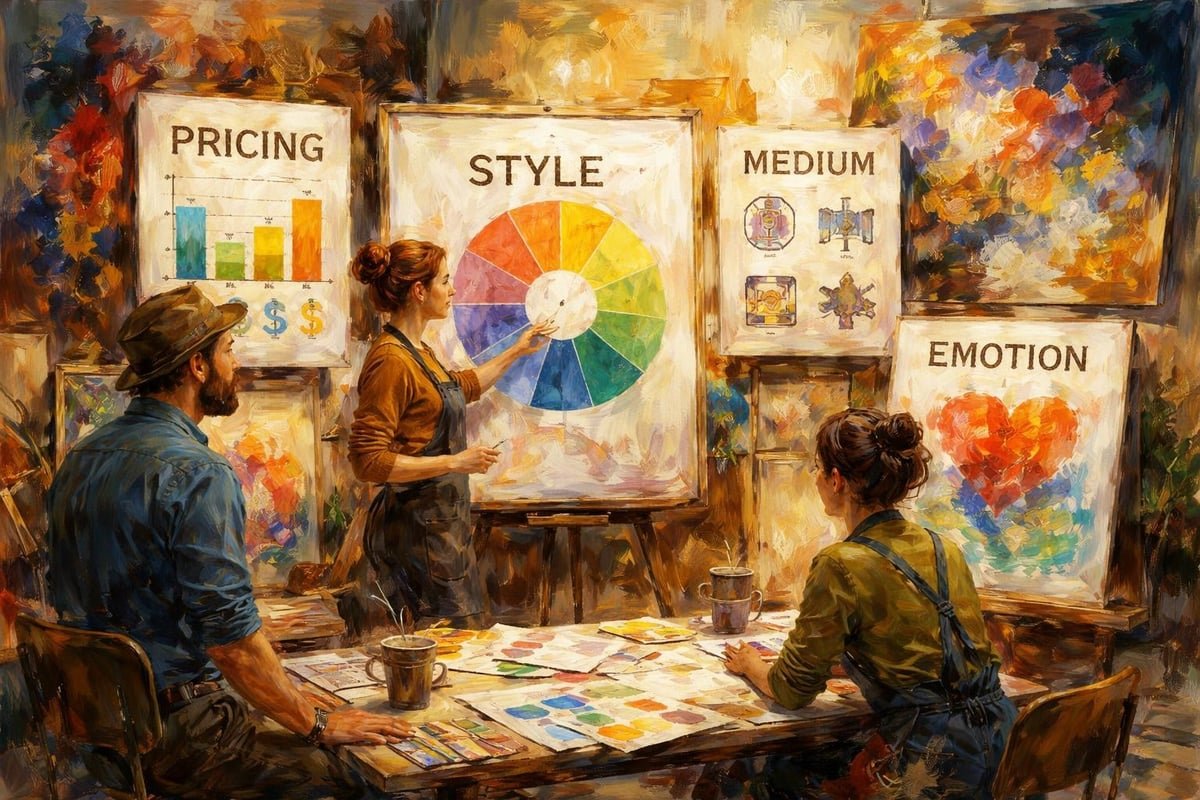
Consider these factors when carving out your niche:
Artistic style: Abstract, figurative, mixed media, or conceptual works
Price range: Emerging artist affordability or investment-grade pieces
Emotional impact: Art that soothes, provokes, celebrates, or questions
Medium: Original paintings, limited edition prints, or both
When you specialize in contemporary artwork, you can speak more knowledgeably to collectors and build genuine expertise. This focused approach helps you curate more cohesively and market more effectively.
Curating Your Collection
Curation is the heart of any successful artwork shop. It's not about filling walls with whatever's available. It's about telling stories and creating connections through carefully selected pieces.
Building Relationships with Artists
Strong artist relationships form the foundation of exceptional curation. When you work directly with artists, you gain deeper insights into their creative process, inspiration, and the stories behind each piece.
Visit artists in their studios when possible. Understanding how artists work in their creative space gives you authentic stories to share with collectors. These narratives add tremendous value and help buyers connect emotionally with the work.
Regular communication with your artists ensures you're first to know about new collections, special pieces, or limited editions. This insider access becomes a competitive advantage for your artwork shop.
Quality Over Quantity
You might feel pressure to stock hundreds of pieces, but resist that urge. A well-curated selection of 30-50 pieces often performs better than a cluttered space with 200 mediocre works.
Each piece should earn its place. Ask yourself:
Does this work evoke genuine emotion?
Does it align with our shop's identity?
Can we authentically represent the artist and their vision?
Will this challenge or delight our collectors?
Does it maintain our quality standards?
Selection Criteria Why It Matters How to Assess
Emotional Impact Drives collector connection Personal reaction + feedback from diverse viewers
Technical Quality Reflects shop standards Artist training, execution, materials used
Story Strength Enhances value perception Artist background, inspiration, creative journey
Market Fit Ensures commercial viability Collector feedback, price point analysis
Creating an Exceptional Customer Experience
Your artwork shop experience extends far beyond the art itself. Every touchpoint matters, from the first website visit or gallery entrance to post-purchase follow-up.
The Physical Space (If Applicable)
If you operate a physical artwork shop, the environment communicates volumes before anyone looks at a single piece. Lighting is absolutely crucial. Natural light works beautifully for some pieces, while others demand carefully positioned gallery lights to reveal their depth and texture.
Space between pieces allows each work to breathe. Overcrowding overwhelms visitors and diminishes the impact of individual artworks. Think museum-quality spacing rather than retail density.
Consider the sensory experience holistically:
Sound: Quiet background music or silence lets visitors focus
Scent: Subtle, non-intrusive fragrances create ambiance
Temperature: Comfortable climate encourages lingering
Seating: Places to sit and contemplate pieces from different angles
Safety matters too, especially if you're running workshops or demonstrations alongside your sales. Following comprehensive art safety guidelines protects everyone and demonstrates professionalism.
The Digital Experience
In 2026, your online presence functions as a 24/7 artwork shop. Your website should be visually stunning yet fast-loading, with high-quality images that accurately represent each piece.
Virtual viewing rooms have become increasingly sophisticated. Consider implementing:
360-degree piece views
Augmented reality features for visualizing art in customers' spaces
Detailed close-ups showing texture and brushwork
Video content featuring artist interviews
Your online shop should make browsing intuitive and purchasing straightforward. Complicated checkout processes lose sales. Every click should feel purposeful and smooth.
Educating Your Collectors
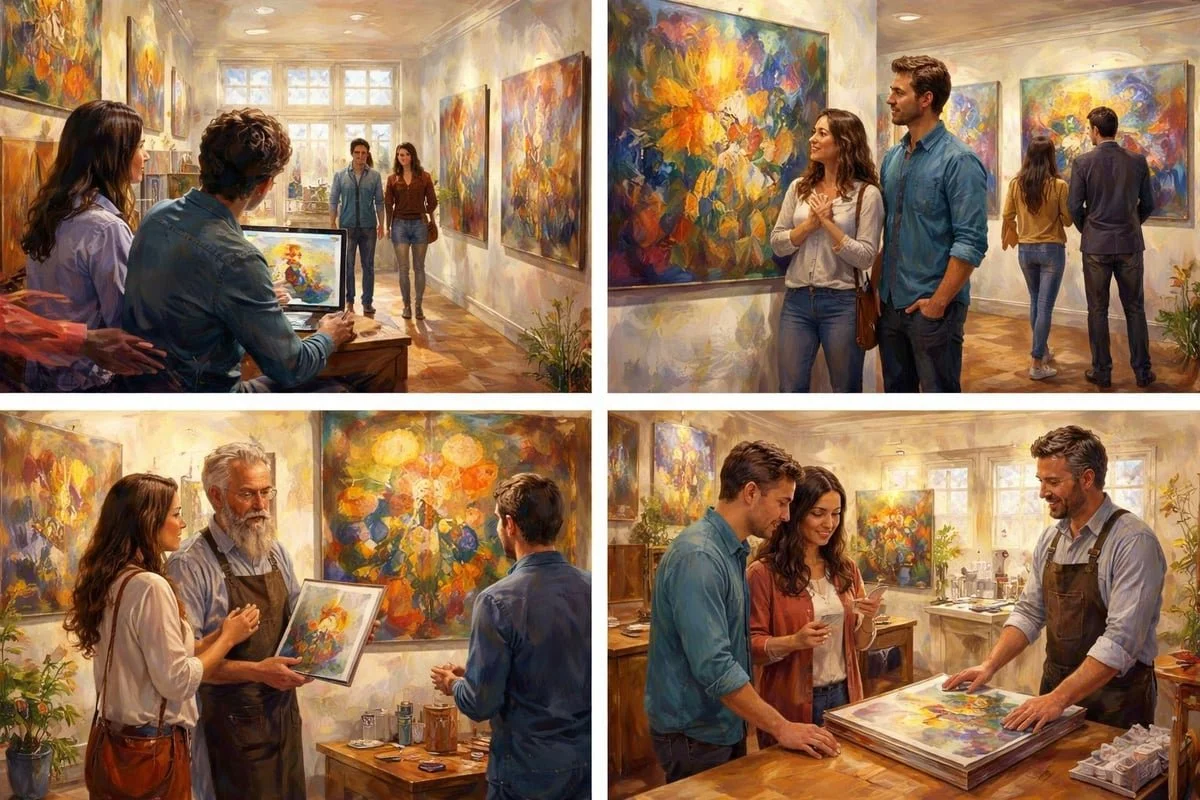
The best artwork shop doesn't just sell art; it educates collectors and builds their confidence. Many potential buyers hesitate because they don't trust their own taste or feel intimidated by the art world.
Breaking Down Barriers
Remove the pretension that sometimes surrounds contemporary art. Speak in accessible language about colour theory and artistic techniques without dumbing down the content.
Host informal conversations rather than formal lectures. Create environments where questions are encouraged and no inquiry feels foolish. When someone asks "why is this art?" treat it as a genuine opportunity for dialogue rather than a challenge.
Content That Adds Value
Your expertise becomes a marketing asset when shared generously. Regular blog content, social media insights, and email newsletters position your artwork shop as a trusted resource.
Share content about:
Understanding different contemporary art movements
How to start an art collection on any budget
Caring for and displaying artwork properly
Artist spotlights and studio visits
The stories and inspiration behind specific pieces
When you explore topics like famous modern art pieces, you help collectors develop their visual literacy and appreciation. This education ultimately leads to more confident purchasing decisions.
Pricing Strategy and Transparency
Pricing remains one of the trickiest aspects of running an artwork shop. Too high, and you lose potential buyers; too low, and you undervalue the artists and damage perceived quality.
Developing Fair Pricing
Work collaboratively with artists to establish pricing that reflects:
Time and materials invested
Artist's experience and reputation
Piece size and complexity
Market comparables
Your shop's positioning
Consistency matters. Similar-sized pieces by the same artist should follow logical pricing patterns. Arbitrary price jumps confuse collectors and erode trust.
Pricing Factor Weight in Decision Adjustment Range
Artist Experience High 2x-10x variation
Piece Size Medium Linear to square footage
Medium Complexity Medium 20-50% premium
Market Demand Variable 30-100% premium
Limited Edition Status Medium 40-60% of original
Print Options and Accessibility
Offering prints alongside originals makes your artwork shop accessible to broader audiences. Limited edition prints maintain exclusivity while opening doors for collectors with smaller budgets.
Be transparent about print specifications: numbering, signing, paper quality, and reproduction methods. Collectors deserve to know exactly what they're purchasing.
When showcasing large modern artwork, offer multiple size options in prints. This flexibility helps buyers find the perfect fit for their space and budget.
Marketing Your Artwork Shop
Even the most beautifully curated artwork shop needs strategic marketing to thrive. In 2026, successful marketing blends digital sophistication with authentic human connection.
Social Media Presence
Visual platforms naturally suit artwork shops. Instagram, Pinterest, and emerging visual platforms showcase your collection to global audiences.
Post regularly, but prioritize quality over frequency. Each post should either:
Showcase a piece with compelling context
Share artist stories and creative processes
Provide educational content about art appreciation
Highlight collector testimonials and installations
Offer behind-the-scenes glimpses of your shop
Engagement matters more than follower count. Respond thoughtfully to comments, ask questions, and build genuine community around your shared love of art.
Email Marketing That Resonates
Your email list represents your most valuable marketing asset. These people have actively chosen to hear from you.
Segment your list based on:
Collectors who've purchased previously
People who've visited but not purchased
Newsletter subscribers interested in art education
Followers of specific artists or styles
Tailor content to each segment. Previous buyers might appreciate first access to new collections, while educational subscribers value insights into artistic techniques and processes.

Collaborations and Events
Partner with complementary businesses to expand your reach. Interior designers, home staging companies, and lifestyle brands share overlapping audiences with your artwork shop.
Host events that bring people together around art:
Artist meet-and-greets
Themed collection launches
Collector appreciation evenings
Art workshops and demonstrations
Panel discussions on contemporary art topics
Events transform your artwork shop from a transactional space into a community hub. When following workshop safety protocols, you ensure these gatherings remain enjoyable and secure for all participants.
Managing Operations Smoothly
Behind every successful artwork shop lies efficient operational management. The administrative side might lack glamour, but it determines whether your business thrives or struggles.
Inventory Management
Track every piece meticulously. You need to know:
Current location (gallery, storage, or on loan)
Consignment terms and artist payment schedules
Provenance and authenticity documentation
Insurance coverage and valuations
Sales history and pricing changes
Digital inventory systems designed for galleries streamline this process. They prevent embarrassing situations like selling pieces you don't actually have or losing track of consignment agreements.
Shipping and Handling
Artwork requires specialized packing and shipping. Partner with carriers experienced in handling valuable, fragile items. Invest in proper packing materials: acid-free paper, corner protectors, sturdy boxes, and adequate cushioning.
Insurance during transit isn't optional. It protects both you and your collectors from the heartbreak of damaged pieces. Many artwork shop owners find that reliable art handling procedures reduce claims significantly.
Financial Management
Keep meticulous financial records from day one. Track:
Sales by artist, medium, and price point
Commission structures and artist payouts
Operating expenses by category
Cash flow patterns and seasonal variations
Marketing ROI by channel
This data informs smarter decisions about what to stock, when to run promotions, and where to invest marketing budget.
Building Long-Term Collector Relationships
The most successful artwork shop owners view each sale as the beginning of a relationship, not the end. Repeat collectors and referrals drive sustainable growth.
Post-Purchase Follow-Up
Contact buyers a week after delivery to ensure the piece arrived safely and they're delighted with it. This simple gesture demonstrates care and opens dialogue.
After a few months, check in again. Has the piece transformed their space as hoped? This conversation often leads to discussions about additional purchases or referrals to friends.
Collector Perks
Reward loyalty with genuine benefits:
Early access to new collections
Exclusive invitations to preview events
Discounts on additional purchases
Free or discounted framing services
Complimentary art consultation for new spaces
These perks cost relatively little but build tremendous goodwill and encourage repeat business.
Creating Community
Your collectors share a common interest in contemporary art. Facilitate connections between them through collector gatherings, private viewings, and online groups.
When collectors feel part of a community rather than just customers, they become ambassadors for your artwork shop. They'll naturally recommend you to friends because they're genuinely enthusiastic about what you've built.
Adapting to Market Changes
The art market evolves constantly. Successful artwork shop owners stay curious and adaptable, watching trends without being enslaved by them.
Staying Informed
Follow art market reports, attend trade shows, and maintain connections with other gallery owners. Understanding broader market movements helps you make informed decisions about inventory and pricing.
Read art publications, visit other galleries, and most importantly, listen to your collectors. What are they seeking? What concerns do they express? Their feedback provides invaluable market intelligence.
Embracing Technology Thoughtfully
New technologies offer exciting possibilities for artwork shops, from blockchain authentication to AI-powered recommendation engines. Evaluate each innovation critically: does it genuinely enhance the collector experience, or is it technology for technology's sake?
Virtual reality gallery tours, for instance, can extend your reach globally. Augmented reality room previews help collectors visualize pieces in their homes. These tools serve real purposes and solve actual problems.
Sustainability Considerations
Contemporary collectors increasingly care about sustainability. Consider the environmental impact of:
Shipping methods and materials
Framing options (sustainable woods, recycled materials)
Print production processes
Gallery energy consumption
Packaging waste
Transparent communication about your sustainability efforts resonates with environmentally conscious collectors.
The Human Element in Your Artwork Shop
Technology and systems matter, but never forget that art is fundamentally about human emotion and connection. Your passion and authenticity attract like-minded collectors.
Share your genuine enthusiasm. When a piece moves you, let that emotion show. Collectors don't want robotic sales people; they want guides who genuinely love art and can articulate why specific pieces matter.
Understanding why artists create deepens your ability to connect collectors with work that will resonate in their lives. Art serves as healing, expression, challenge, and celebration. When you help someone find the perfect piece, you're facilitating something far more meaningful than a transaction.
Trust your instincts about which artists to represent and which pieces to stock. Data informs decisions, but your curatorial eye and emotional intelligence ultimately guide your most successful choices.
Running a successful artwork shop in 2026 requires blending traditional gallery expertise with modern digital savvy, all while keeping authentic human connection at the centre. Whether you're showcasing originals or offering accessible prints, your role extends beyond sales to education, community building, and facilitating those magical moments when the perfect piece finds its perfect home. If you're looking for contemporary art that evokes emotion, challenges perceptions, and brings unexpected moments of joy, explore the collection at Spirit Glow Art®, where abstract paintings are created to transform spaces and stir souls.